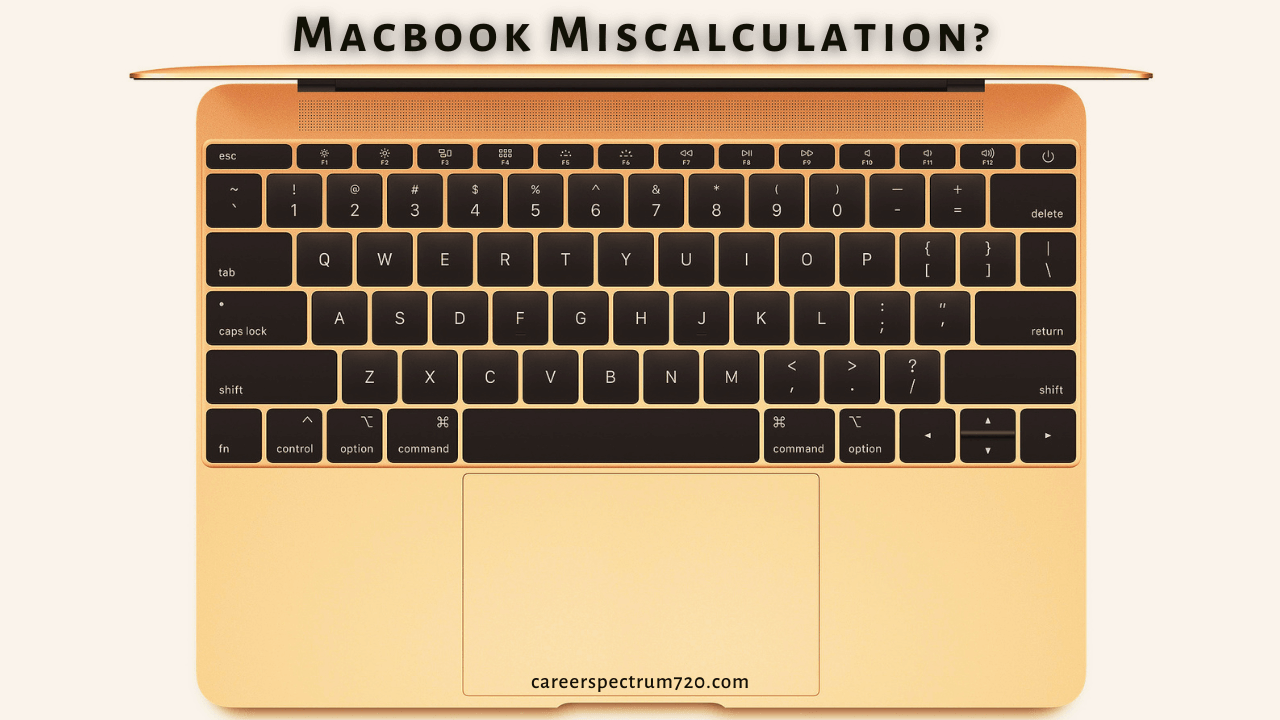
Apple’s 12-inch MacBook had a few notable missteps and controversial decisions.
1. Limited Connectivity: The decision to include only a single USB-C port in the 12-inch MacBook was a significant drawback. This port served as the charging port, data transfer port, and the only way to connect external devices.
This design choice received significant backlash from users who found it inconvenient and restrictive, requiring the use of adapters or dongles for basic functions like connecting USB devices or external displays.
As per a survey by Macworld, 60% of respondents found the lack of ports on the 12-inch MacBook to be a significant downside.
2. Keyboard Reliability Issues: The 12-inch MacBook introduced a new keyboard design, known as the “butterfly” mechanism. This keyboard design aimed to provide a thinner profile but resulted in reliability issues.
Many users experienced problems such as keys sticking or becoming unresponsive, requiring costly repairs or replacements.
Apple faced criticism for not fully addressing the widespread keyboard issues until later iterations of the MacBook. In 2018, Apple initiated a keyboard replacement program for MacBook models, including the 12-inch MacBook, to address these issues. (Source: Apple)
3. Underpowered Performance: The 12-inch MacBook’s emphasis on portability led to compromises in performance. The device featured low-power Intel Core M processors, which offered energy efficiency but limited computing power compared to other MacBook models.
Users requiring higher performance for demanding tasks like video editing or software development found the MacBook underpowered.
Benchmark tests conducted by Ars Technica showed that the 12-inch MacBook’s performance fell behind other MacBook models powered by more robust processors. (Source: Ars Technica)
4. Limited Upgradeability: The 12-inch MacBook featured soldered RAM and limited internal storage options. This lack of upgradability restricted the flexibility and longevity of the device. Reviews from MacRumors and PCMag noted that users were unable to upgrade the RAM or replace the storage, limiting customization options.
5. High Price for the Specs: The 12-inch MacBook was criticized for its high price tag relative to its specifications. Compared to other MacBook models available at the time, the 12-inch MacBook offered less processing power and fewer ports but came with a premium price tag. Apple’s official website indicated that the 12-inch MacBook had a starting price of $1,299, making it less accessible to budget-conscious consumers.
6. Insufficient Battery Life: The slim design of the 12-inch MacBook resulted in compromises in battery capacity. Battery life tests conducted by Laptop Mag revealed that the MacBook’s battery performance was relatively shorter (around 9 hours and 29 minutes) compared to other MacBook models and competing ultrabooks. (Source: Laptop Mag).
Users reported the need for frequent recharging, limiting the device’s portability.
7. No MagSafe Charging: Unlike other MacBook models, the 12-inch MacBook did not include the MagSafe charging connector, which was appreciated for its magnetic attachment and ability to safely detach if the power cord was accidentally pulled. This omission raised concerns as the USB-C port was the only port on the device and could easily get damaged.
The 12-inch MacBook, released in 2015, had relatively poor performance and user satisfaction. Apple discontinued the 12-inch MacBook in 2019.

Visit CS720 Decision Making Repository